
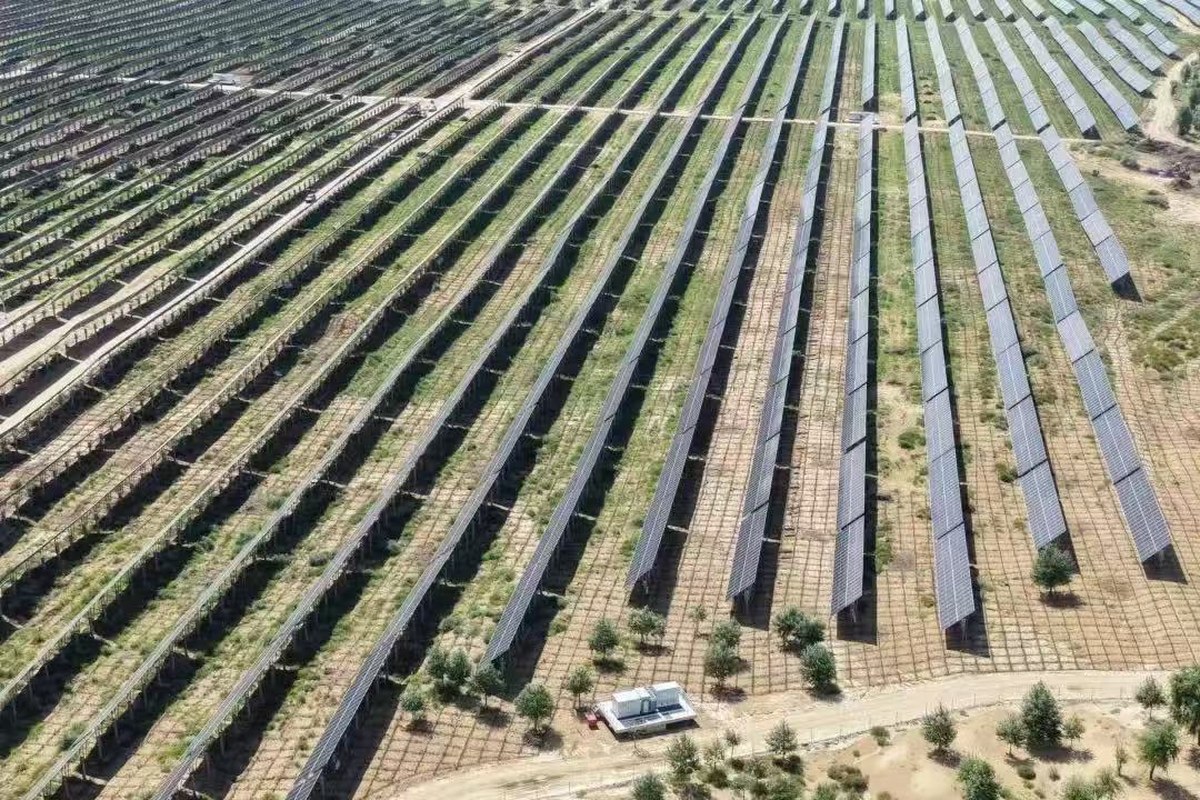
A renewable project does not present a constant, conventional load. Output follows weather, inverter operation and the grid-connection regime, so the transformer package should be defined from the plant operating profile rather than from peak MW alone.
Start at the inverter and work toward the grid
The design path begins with inverter output voltage, block size and the number of inverter feeders. From there, the step-up ratio, winding arrangement, impedance, harmonic spectrum and medium-voltage collection topology can be coordinated. At the grid interface, the study must also account for utility voltage limits, reactive-power requirements, fault contribution and protection philosophy.
- Generation blocksConfirm inverter ratings, operating window, overload behavior and harmonic data.
- MV collectionCoordinate step-up transformers, switchgear, cable ratings, protection and auxiliary supply.
- Grid connectionDefine main transformer duty, metering, control, reactive support and utility interfaces.
Thermal duty is a daily curve
Solar output rises and falls each day. Battery projects may charge and discharge in both directions. The temperature model should therefore reflect cyclic loading, enclosure ventilation, solar radiation and local ambient conditions. Where harmonics are material, eddy and stray losses also require attention.
Inverter voltage, plant capacity, block arrangement, harmonic spectrum, grid voltage and fault level.
Altitude, maximum temperature, dust, humidity, corrosion category, access and noise limits.
Transformers, RMUs or switchgear, protection, SCADA interfaces, station service and spares.
Drawings, calculation notes, routine/type test records, manuals, packing lists and commissioning documents.
For Apex, a solar EPC electrical package means engineering coordination, procurement and delivery of the agreed equipment scope. Site construction is performed by the project’s appointed or cooperating installation party, with interfaces defined before shipment.