
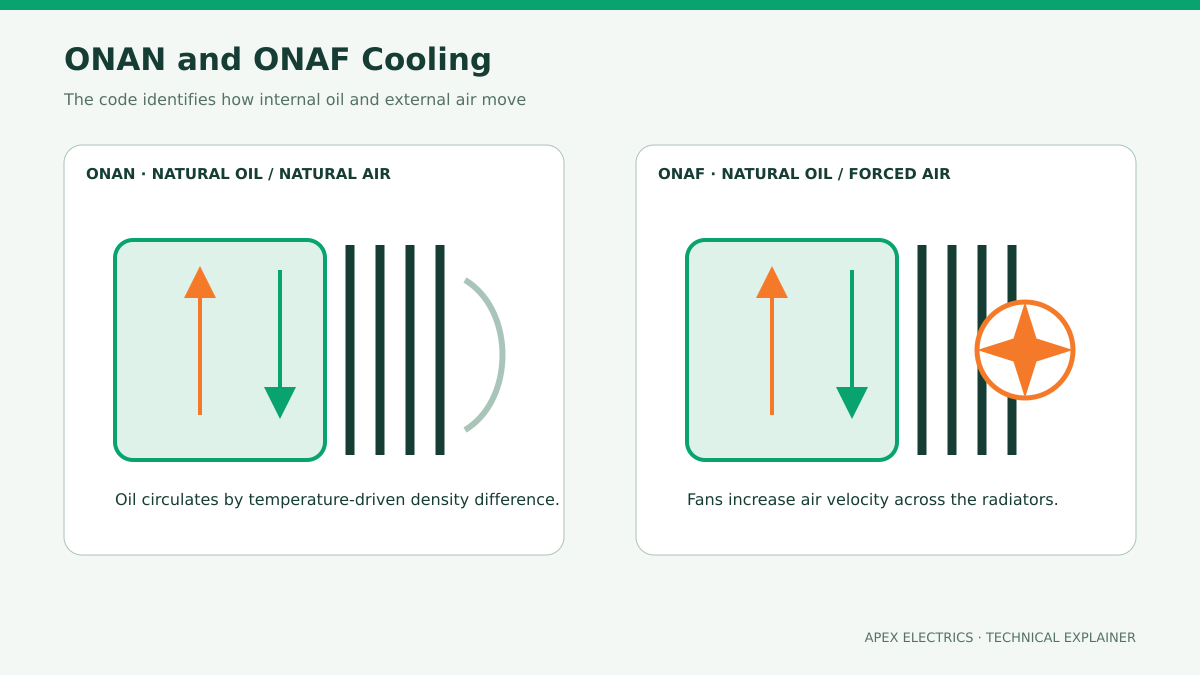
ONAN and ONAF describe how heat moves through a liquid-immersed transformer. ONAN uses natural oil circulation and natural external air flow. ONAF retains natural oil circulation but uses fans to force air across the radiators. The cooling designation must be read together with the guaranteed MVA rating and temperature-rise limits.
How ONAN removes heat
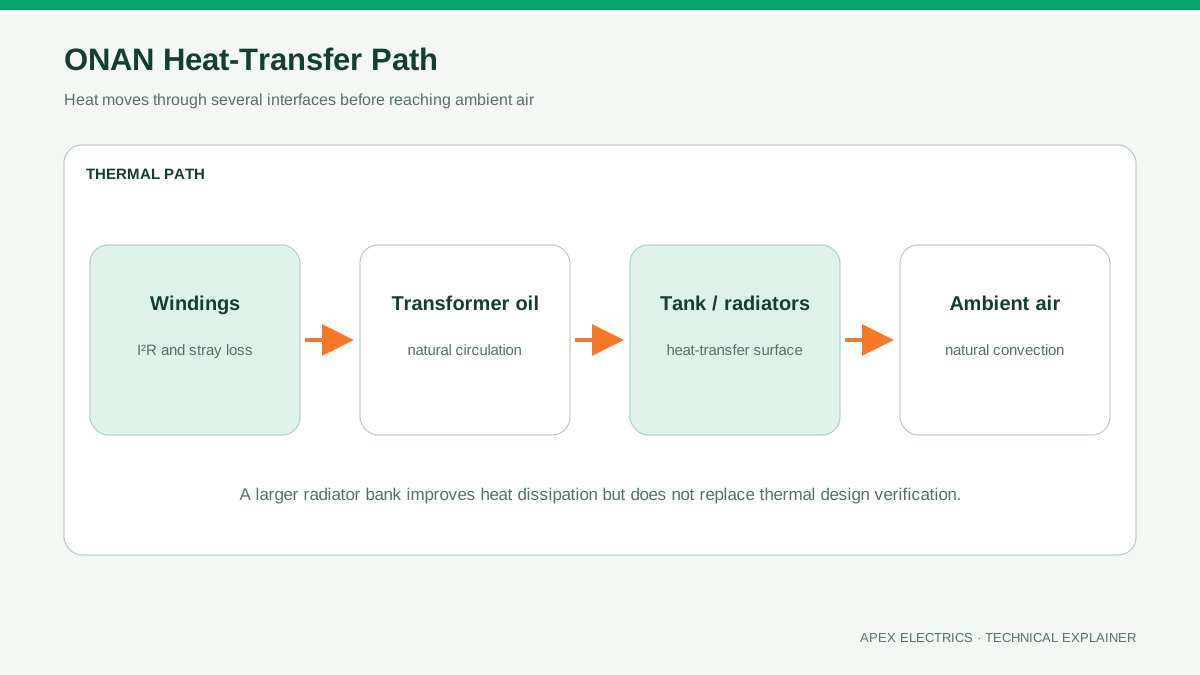
Losses in the core and windings become heat. Warmer oil rises from the active part toward the upper tank and radiator inlet. Heat transfers through radiator surfaces to ambient air, while cooler, denser oil returns toward the bottom of the tank. This thermosiphon process needs no oil pump or radiator fan.
What changes in ONAF operation
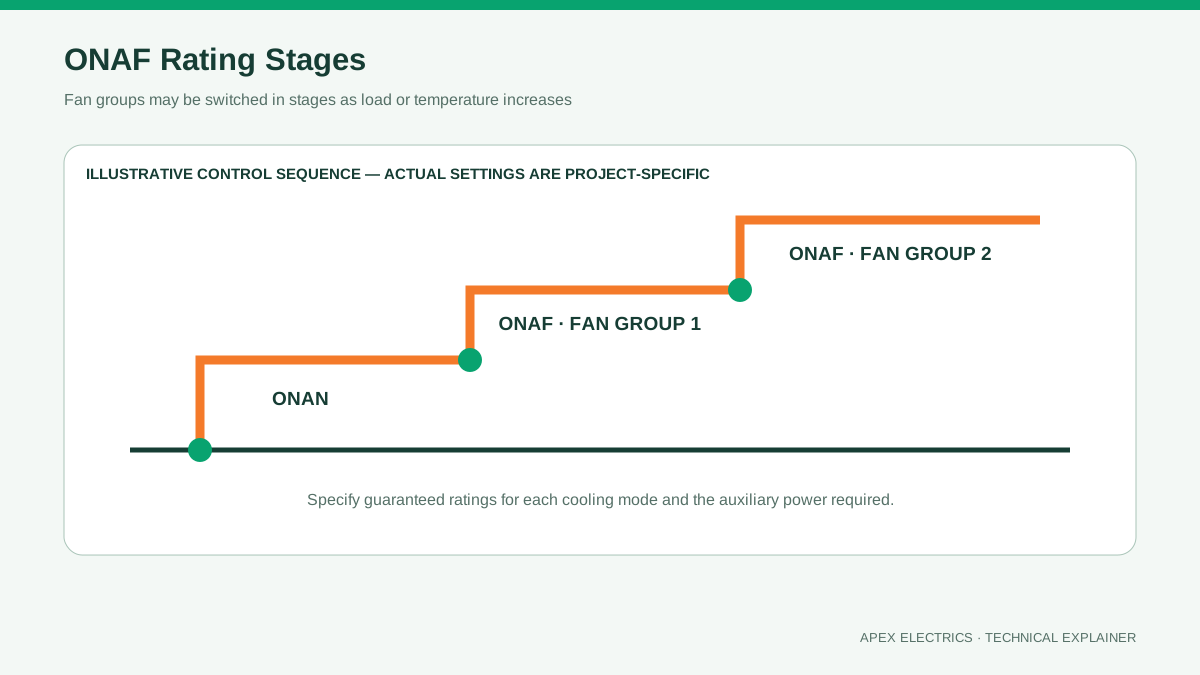
In ONAF mode, radiator fans increase air velocity and heat rejection. A transformer may therefore have staged ratings such as an ONAN base rating followed by one or more ONAF ratings. Those ratings are design-specific: they must be stated on the nameplate, guaranteed by the manufacturer and demonstrated under the applicable temperature-rise requirements. Adding fans to an ONAN transformer does not by itself create an approved higher rating.
| Operating issue | ONAN | ONAF |
|---|---|---|
| External air movement | Natural convection | Radiator fans provide forced airflow |
| Auxiliary supply | No fan supply required | Control and fan power required |
| Noise | No fan contribution | Fan noise must be included in the site assessment |
| Failure response | Thermal alarms still apply | Loss of a fan group may require load reduction to the stated available rating |
| Maintenance focus | Radiator condition, oil path and cleanliness | Also fan motors, guards, contactors, controls and stage logic |
Temperature limits are not one number
Transformer loading is governed by the thermal design, ambient conditions and ageing risk. Top-oil temperature, average winding rise and winding hot-spot temperature describe different parts of the thermal condition. A normal top-oil indication does not prove that every local winding hot spot is within limit. Load cycle, previous loading, ambient temperature and cooling availability all influence the result.
Cooling data to include in an enquiry
- Required ONAN and ONAF ratings, including each cooling stage
- Maximum ambient temperature, daily average and site altitude
- Expected load cycle, emergency loading policy and harmonics
- Fan supply voltage, redundant groups and preferred control arrangement
- Automatic start/stop setpoints, manual control and remote indications
- Noise limit, radiator orientation and space available for airflow
- Alarm and trip contacts for temperature and cooling-system failure
Common cooling mistakes
Do not block radiator airflow with walls, acoustic panels or storage. Do not assume every fan failure requires an immediate trip; the operating response should follow the transformer’s stated ONAN capability, actual load and temperature protection scheme. Likewise, do not specify a higher ONAF rating without confirming winding, lead, bushing, tap-changer and other current-carrying limits.
Practical conclusion: Specify cooling as a complete operating system—rating stages, ambient conditions, auxiliaries, controls, noise and failure response—not as a four-letter code alone.