
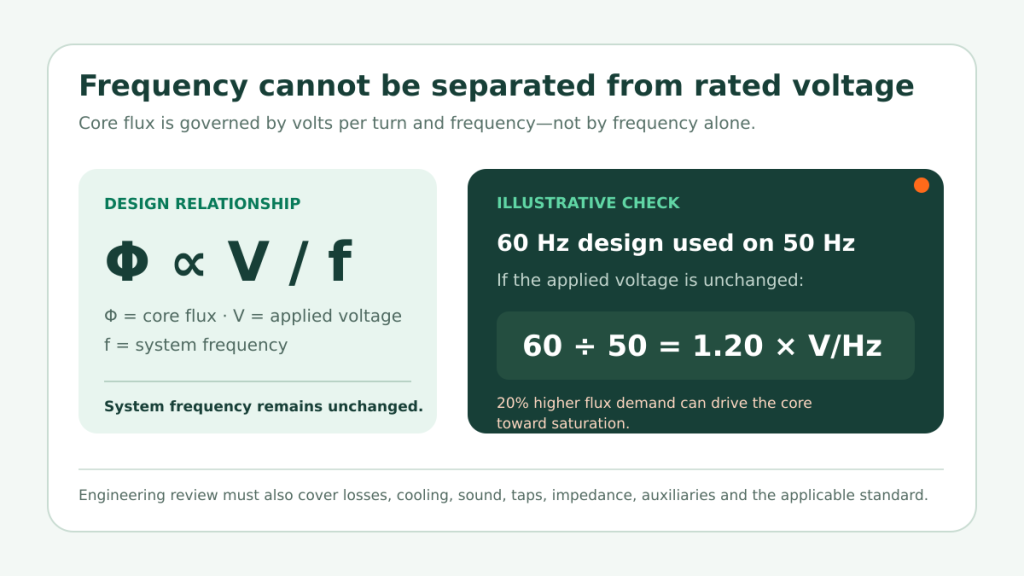
A power transformer changes voltage; it does not change system frequency. A 50 Hz or 60 Hz transformer must therefore be selected against the actual operating voltage, frequency and duty. The first technical check is volts per hertz, but a responsible approval also covers losses, temperature rise, sound, impedance, tapping equipment, auxiliaries and the governing standard.
Why frequency belongs in the transformer design basis
In simplified form, transformer core flux is proportional to applied voltage divided by frequency and winding turns. If a transformer designed for 60 Hz is supplied at the same voltage but 50 Hz, its volts-per-hertz value rises by 20%. That higher flux demand can move the core toward saturation, increasing exciting current, loss, sound and heating.
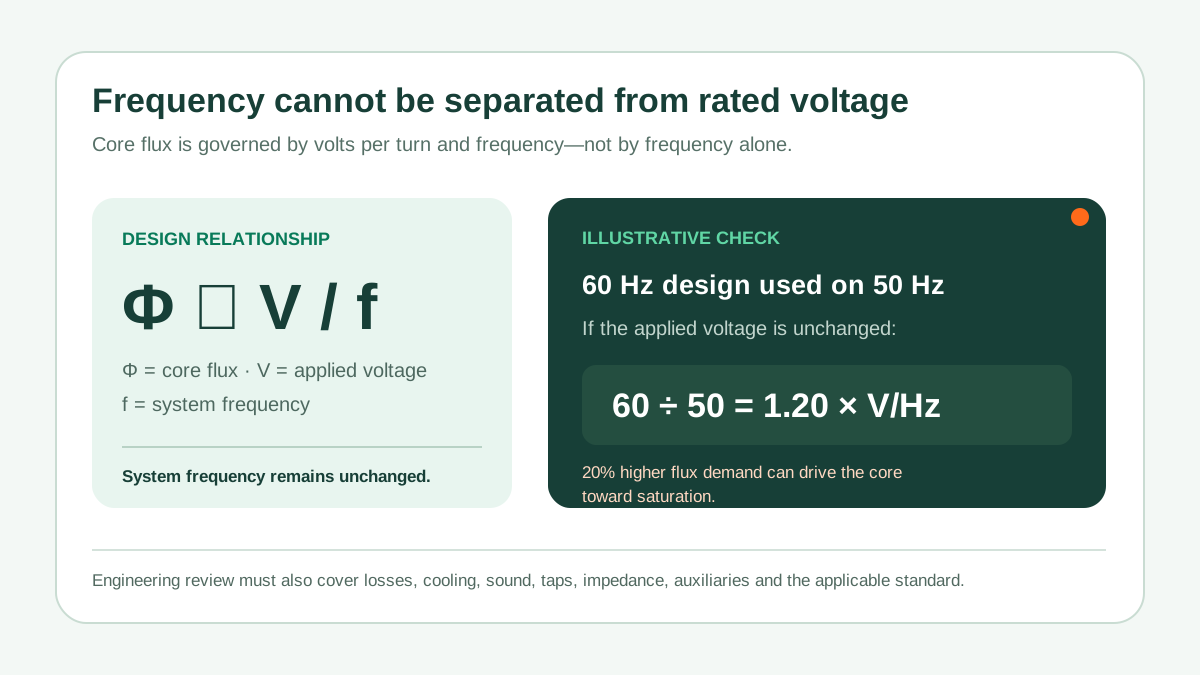
The opposite change is not automatically a free approval. Operating a 50 Hz design at 60 Hz and the same voltage reduces volts per hertz, but the complete transformer still has to meet its specified rating, losses, impedance, temperature-rise, sound and accessory requirements. Fans, pumps, tap-changer drives, control transformers, meters and timing functions may also have their own frequency limits.
| Proposed use | First V/Hz observation | Required decision |
|---|---|---|
| 60 Hz design at 50 Hz, same voltage | V/Hz increases by 20% | Do not energize on this assumption. Manufacturer review or voltage reduction is required. |
| 50 Hz design at 60 Hz, same voltage | V/Hz decreases | Still confirm rating, loss guarantees, impedance, cooling, sound and all frequency-dependent auxiliaries. |
| Voltage and frequency both change proportionally | V/Hz may remain similar | Review insulation level, current, winding duty, taps, terminals, system fault level and standard. |
| Nameplate states both 50 and 60 Hz | Dual-frequency operation may be part of the approved design | Verify the rating and guarantees at each frequency; do not assume every value is identical. |
A practical 50 Hz or 60 Hz selection sequence
Start with the network, not with an existing catalog model. Confirm nominal and maximum system voltage, frequency, phase, vector group and neutral arrangement. Then compare the proposed operating V/Hz with the transformer design basis. Only after this check should the thermal, dielectric, mechanical and auxiliary interfaces be closed.
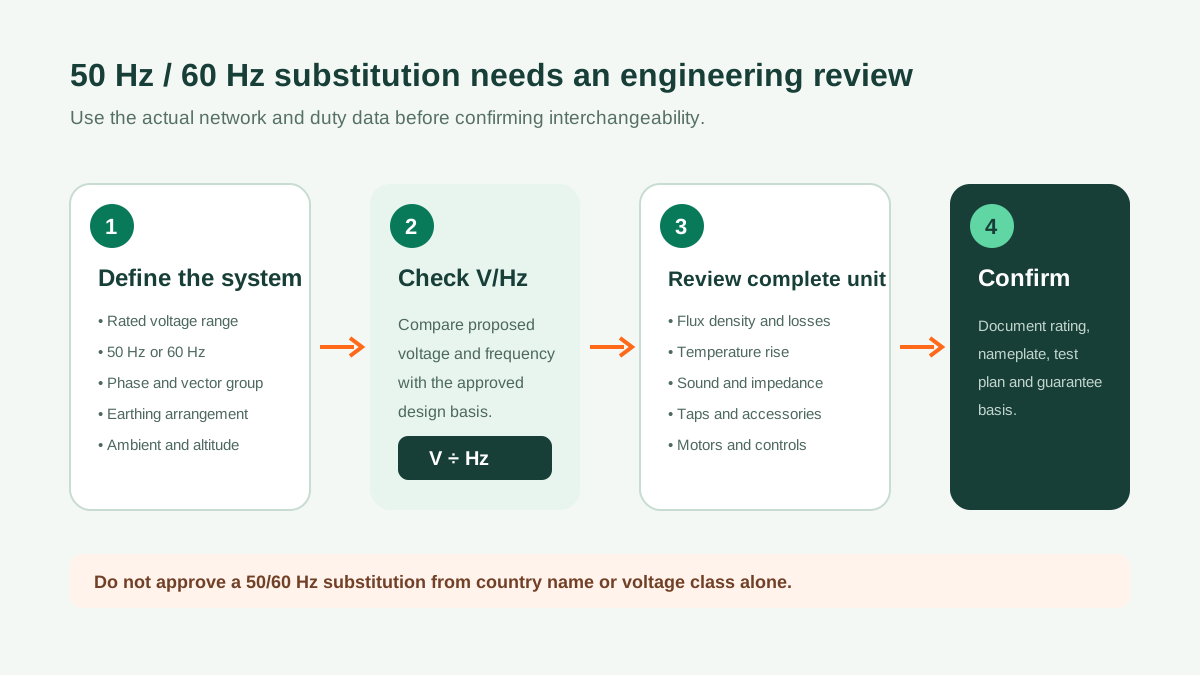
What must be checked beyond core flux
- Rated current and winding temperature: a voltage or MVA change can alter current even when V/Hz is acceptable.
- Guaranteed losses and efficiency: core loss is frequency- and flux-dependent; load loss and auxiliary power must be compared on the stated basis.
- Impedance and short-circuit duty: system studies and protection settings rely on the guaranteed impedance for the supplied design.
- Sound: core flux, construction and cooling equipment all contribute. The specified test condition has to match the project requirement.
- Tap range and regulation: the required service voltage, tap positions and maximum current must be coordinated, especially when nominal voltage also changes.
- Cooling equipment: fan and pump motors, contactors, space heaters and control supplies need the correct frequency and voltage.
- Standards and insulation: frequency does not replace the need to define highest voltage for equipment, insulation level, tests and local utility requirements.
Data needed for a reliable frequency review
A useful enquiry gives the manufacturer one coordinated data set. Sending “60 Hz required” without voltage range, load profile or site conditions leaves the most important design questions open.
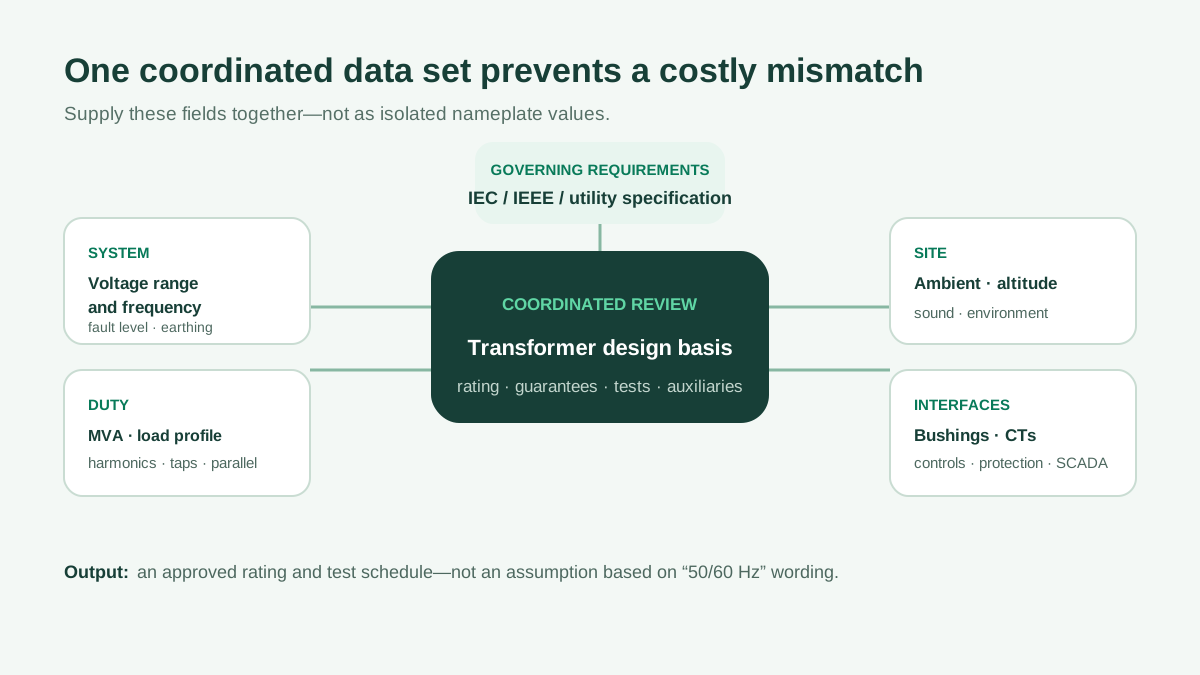
- Nominal system voltage, maximum operating voltage and required secondary voltage
- 50 Hz or 60 Hz system frequency and any permitted variation
- Rated MVA, load cycle, power factor and harmonic-producing loads
- Single-phase or three-phase arrangement, vector group and neutral earthing
- Required impedance, available short-circuit level and parallel-operation conditions
- Tap-changer type, tapping range, step size and regulated winding
- Cooling stages, ambient temperature, altitude and sound limit
- Insulation levels, applicable IEC or IEEE basis and utility-specific tests
- Auxiliary supply voltage and frequency for fans, pumps, drives, heaters and controls
How to read market labels correctly
“50 Hz market” and “60 Hz market” are useful navigation labels, not complete specifications. Different utilities in the same region can use different transmission voltages, earthing practices, insulation schedules and documentation rules. The destination is important, but the actual utility specification remains the design authority.
Practical conclusion: if an existing transformer is being considered for a different frequency, obtain the original design data and ask the manufacturer to issue a written suitability statement. For a new purchase, specify the operating frequency at the start and require all ratings, auxiliaries and test guarantees to be stated on that basis.