
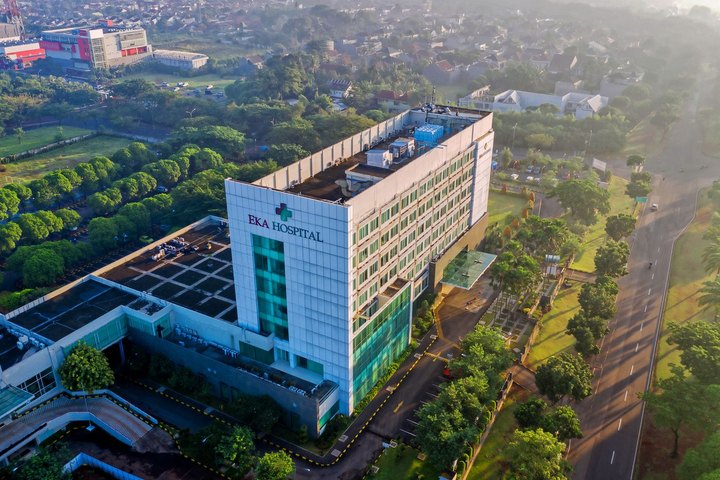
Hospitals, laboratories, schools and public institutions combine occupied spaces with essential electrical services. The design must protect continuity, fire safety, power quality and maintainability without overstating the role of any single product. Transformers and switchgear support the system architecture defined by the electrical consultant and local code.
Classify loads before selecting equipment
Life-safety, critical, equipment and normal loads may require different sources, transfer arrangements and distribution paths. The single-line diagram should identify which loads remain energized during a utility outage, how generators or UPS systems connect and what maintenance can occur without shutting down essential services.
Indoor transformer considerations
Dry-type transformers are frequently used where fire strategy and indoor location discourage liquid-filled equipment. Cast-resin windings provide a sealed surface suitable for moisture and contamination control; VPI construction provides an open, maintainable insulation system for clean electrical rooms. The choice still depends on enclosure, ventilation, temperature, altitude and local code.
Power quality and isolation
| Facility load | Design concern | Information to provide |
|---|---|---|
| Medical or laboratory equipment | Noise, leakage current, isolation and sensitive electronics | Manufacturer power-quality and grounding requirements |
| UPS and IT systems | Harmonics, neutral current and bypass fault contribution | UPS topology, harmonic spectrum and operating modes |
| Large HVAC plant | Motor starting and variable-speed drives | Motor list, starting method and drive data |
| Emergency system | Transfer selectivity and restoration sequence | Generator, ATS and essential-load schedule |
Maintenance in occupied facilities
Access routes, isolation points, spare ways and replacement strategy deserve early attention. Switchgear segregation, draw-out devices where justified, thermal monitoring and clear labelling can support planned maintenance. Any redundancy claim should be checked against the complete distribution path, including cables, controls and common rooms.
Information for review
Send the essential and normal load schedules, one-line diagram, source and generator data, UPS details, transformer room conditions, harmonic information, fire and acoustic criteria, required standard and delivery location.