
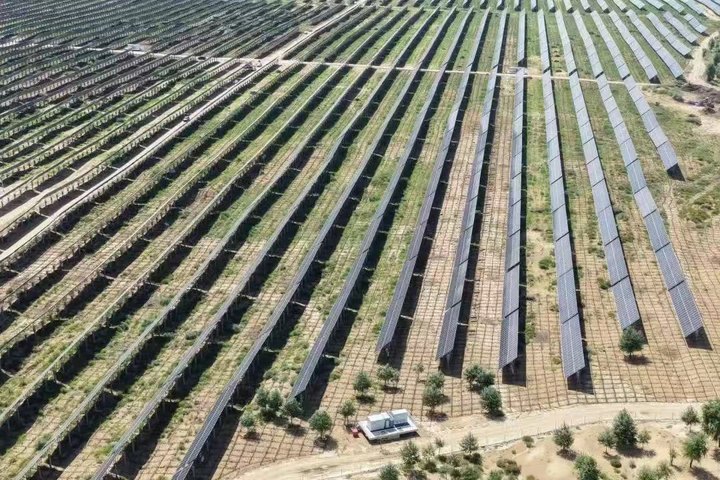
A utility-scale solar plant is an interconnected electrical system rather than a collection of independent products. Inverter blocks, step-up transformers, the MV collector network, protection, metering, SCADA and the point-of-interconnection substation must use one consistent electrical baseline. Apex supports equipment package definition, engineering coordination, procurement and delivery; site construction is completed by the appointed project or local installation partner.
Translate plant capacity into equipment blocks
The plant MW rating, inverter output voltage and preferred block size establish the number and rating of inverter transformers. Collector voltage, cable length, reactive-power duty and grid requirements influence winding design, impedance, losses, switching and protection. A project with the same MW rating can require a different equipment solution when the climate, grid code or interconnection voltage changes.
Typical electrical package
| System layer | Typical equipment | Key coordination point |
|---|---|---|
| Generation block | Inverters, inverter-duty step-up transformer, MV switchgear or RMU | Inverter waveform, harmonics, multiple LV windings and block rating |
| Collector network | MV feeders, ring units, protection and metering | Collector voltage, cable charging, fault level and feeder selectivity |
| Grid connection | Main power transformer, HV/MV switchgear and protection | Grid code, reactive power, voltage regulation and point-of-connection data |
| Plant services | Auxiliary transformer, AC/DC distribution and control power | Black start, station loads, backup supply and battery autonomy |
Transformer duty in renewable plants
Renewable generation produces cyclic loading and may introduce harmonics, frequent energisation and high ambient exposure. The specification should address load profile, harmonic spectrum, electrostatic shielding where required, temperature rise, efficiency evaluation, corrosion class and surge environment. For the main grid transformer, OLTC range, impedance and cooling stages follow the interconnection study.
Grid-code and control interfaces
Protection, revenue metering, plant controller signals and SCADA points should be defined as an interface register. Equipment suppliers need the approved relay philosophy, CT/VT requirements, communication protocol, time synchronisation and trip matrix. Leaving these details until production creates avoidable wiring and schedule changes.
Apex delivery boundary
Apex can coordinate the electrical equipment schedule, technical submissions, partner production, inspection records, export packing and international delivery. Civil design inputs, foundations, cable installation, erection and site construction remain with the EPC or appointed local contractor unless a different written scope is agreed.
RFQ inputs
Provide plant capacity, inverter manufacturer and output data, block size, collector voltage, grid interconnection voltage, single-line diagram, grid code, site temperature and altitude, required equipment boundary, destination and programme. These inputs allow the package to be divided into clear supply lots without losing interface responsibility.